





info@dpadvocates.com
+234-814 083 0309

Blog Full With Left Sidebar

Caption placed here

The case against the COZA Pastor may be more serious than previously thought

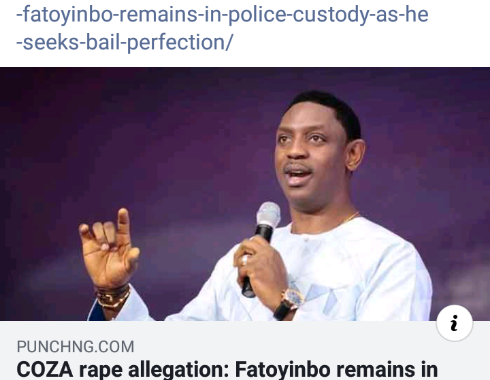
For the police to drill Pastor Abiodun Fatoyinbo for over 8 hours straight, it tells you they have something strongly incriminating against him. The interrogation team was led by a senior female police officer in the rank of Assistant Commissioner of Police, ACP Adaku Anya. Fatoyinbo was questioned at the Force Criminal Investigation Department, Garki Area 10, Abuja. Two other pastors from COZA were questioned the same day. There is a wholly different approach to this investigation, which shows rare professionalism on the part of the police. The police interviewed many other witnesses before getting to the suspect. That ensured they had strong background material before they finally got to interrogate him. What is the kind of evidence that the police would find interesting in a 20-year old rape case? The DPA legal team has analyzed the case and has identified the following possible evidence. (1) The victim's diary, if any. Some people keep daily or weekly or monthly diaries of what happens in their lives. If this lady has kept such diary, her record of the rape when it occurred will be strong evidence that she didn't just make it up. (2) Testimonies of people like friends and relatives she spoke to when it happened and any notes and diaries those people took then will be relevant. (3) Any further communications between the pastor and the the victim during which the pastor apologized or tried to explain why he had sex with her. Example: A text message that says something like: "That was before I became a born again" is incriminating . (4) Evidence that the victim complained or reported the matter to other pastors then. (5) Evidence of obstruction of justice, witness suppression, etc. Any evidence that after the victim went to the press or police, the pastor sent people to either threaten her or to intimidate her or to beg her to forgive and forget will be highly relevant. Remember that about a month ago, it was reported that some policemen went to the victim and tried to force her to sign a document. Recall that the IG later ordered an investigation into the actions of those officers. It is possible that the police found out that the pastor sponsored such illegal police operation. If so, that is strong evidence of cover-up. (6) There may be pattern evidence involved. If the police have evidence about other victims, the police may interview those other victims to know if there has been a pattern of predatory conduct. (7) Maybe other pastors or church officials who don't like this pastor leaked to the police church record of other complaints against this pastor. The important thing is that the police have good reasons to pursue this case. They were not going to release the pastor on bail without stringent bail conditions. This case is important for Nigerians. A rape victim, who is a celebrity, risked public condemnation to come forward to report rape 20 years after the fact. That is a strong message to other victims that it is okay to come forward. It is also, the first time the long arm of Nigerian law is reaching so far back in time to hold a person criminally responsible. And the fact that the suspect is a powerful and influential man is a breath of fresh air. DPA will be following this case closely and reporting to our members. Stay tuned.

One Nigeria: A dream or nightmare? (Part 2) By Dr. Greg (a Rambo)

In part 1 of the series, I established the existence of two main Igbo ideological factions over the existential question of one Nigeria. I refer to the question of one Nigeria as an existential question for the Igbos because the future of the Igbos and their existence as a people depend on how that question is answered. I also established in part 1 that the relationship between the two factions has been characterized by tension and mutual suspicion, and why. I also posited that the tension between the two has escalated naturally to the point of open hostility as confirmed by the attack on Senator Ekweremadu in Germany recently. We must therefore see the Ekweremadu incident as a turning point or a defining moment in the relationship between the restructuring school and the secessionist school of the Ideological divide. Another important element in understanding the differences in the respective attitudes and orientations of the two groups is the generational factor. Compared to factors such as education and wealth, the most outstanding difference between the two factions lies in the fact that they belong mostly to different generations and that has influenced how each faction approaches the question. Whereas, the leaders of the restructuring group are 55 and above, the leaders of the secessionist group are 50 and below. It means that whereas, the restructuring group are made up of people who witnessed the pain and humiliation of the civil war and fear the repeat of war, leaders of the secessionist group did not see the civil war and are not as afraid of war. As is well recognized, knowledge of history has a paradoxical effect on human beings. On the positive side, the knowledge of history equips you with the benefit of hindsight and the wisdom that can come from it. But on the negative side, it burdens you with fear and trepidation leading to inertia and stagnation. For a man like Nnia Nwodo, for instance, who is over 70, he remembers the civil war, the death, the hunger, the humiliation of the Igbos with the 20-pounds-only policy and the policy of abandoned property. Nwodo will more easily associate secession of the Igbos with war and defeat and pain and suffering. Nnamdi Kanu does not have such ready mental connection between secession and war, and even when he foresees war, he does not have such visceral connection between war and defeat. Now, it is not a question of which of the two has a better judgment over the issue. In fact, both of them are guessing the future. What is important is that they have different perceptions of the future, which motivate them differently. Also, among the people of Northern Nigeria, they must act based on their sense of the same history. Those who make decisions for the North are similarly old people. They will perceive secession as likely to lead to war that they will win. The Northern leaders faced with Ohaneze leaders will be aggressive, assertive and unyielding, while Ohaneze leaders will be timid and conceding. (But we are still talking about the Igbo-against-Igbo stage of the conflict.) To further emphasize the importance of generational awareness, I recall the words of Robert Greene:  With generational awareness, "we can see what forces shaped our parents' mindset, and then ours in turn, as we have tried to go in different direction. We can make better sense of the underling changes going on in all areas of society and begin to surmise where the world is headed, to anticipate future tends and to understand the role we can play in shaping events." He continued: To attain generational awareness, "first we must understand the actual profound effect that our generation has on how we view the world, and second we must understand the larger generational patterns that shape history and recognize where our time period fits into the overall scheme." It is clear that leaders of both factions have not fully considered how the generational factors have influence their approaches to the question. Hence their inability to bridge the gap between them and reconcile to the quicken the date of success. Note: the purpose of the generational analysis I made here is to convince you that the restructuring faction will be defeated by natural forces, and the secessionists will prevail. The only question now is how long the fight between the factions might delay things. Another factor that should be brought in here is how some external forces might  play to the advantage of the Igbos. The idea of one Nigeria where the North dominates everybody has actually not been in the long term interests of the North. That was what led to the current backward state of Nigeria. We can attribute virtually all the negative indicia in Nigeria today  to the fact that the North wanted to monopolize power through the subjugation of the Igbos. That's also the reason Nigeria cannot fight insurgency in the northeast. The Nigerian army was designed to prevent a break-up by secession. The army did not prepare to prevent a break-up by invasion. So when Boko Haram invaded Nigeria with plans to carve off a part of its territory, the Nigerian army proved unable. If there had been an army that fully included everybody, it would have been a strong disciplined fighting force that would dispatch Boko Haram within a few days. Thus, the fear on the part of the Igbos that secession would lead to war that the Igbos would lose is exaggerated. The secessionist group is more forward looking because they embody the spirit of the time. They understand that restructuring is no longer an attractive option because it will continue to place the Igbos under the control of the North which will sabotage or derail the restructuring whenever it suits them.  Restructuring might have been an option 25 years ago when the North still had the initiative. But presently, the North is ravaged by wars and instabilities in multiple fronts. The persecution of the middle belt and the alienation of the Yorubas means that the North will not muster the cohesion it needs to keep Nigeria one by force. But this does not mean that the secessionists should  start celebrating. Victory for them is by no means guaranteed. They have not defeated their elder brothers in the restructuring faction.  And when they do, they still have to face the challenges of addressing the interest of the 30% of Biafrans who are not Igbos. All that must be done before they can squarely face the North. In the final part of this series, I will look into how secessionists will have to transition their identity from "Ndi Igbo" to "Ndi Biafra". A minority population of up to 30% is a dynamite in the making and a boiling source of new tensions. Several fundamental issues and roadmap questions must be studied and analyzed.   Dr. Greg 3rd and final part is to follow.

The FBI is not God: Why so much excitement and hysteria over the list?

When they speak of colonial mentality of backward people, they are referring to the tendency of black colonized people to react in self-replicating manner toward the white colonial masters. If the list of 80 fraud-accused people had come from the EFCC, would the reaction have been the same? Yet, there is no basis to consider the FBI perfect. Indeed, there are many things problematic about the FBI list. First, DPA News has information that it was Obinwanne Okeke, Invictus Obi, who provided the FBI information that lead to the completion of investigation in the last case. He is cooperating with the FBI and we expect that more Nigerians will be exposed. But information from him may be tainted. Second, most of the 77 Nigerians have never entered the United States. Whatever role they played was done from Nigeria. So, Nigeria has the jurisdiction to try them. If so, they will not be extradited to the US. Third, most of the people on the list do not know themselves. The pivot of all interactions were the first 2 or 3 people who are based in the US. So, you need to look closely at the conspiracy charges. Fourth, it is absolutely not in the interest of the US to extradite them to the US. That means most of those men will be entering the US for the first time; and for what purpose? Why spend American tax payers money to fly them to the US, try them in the US, imprison them in the US, and then deport them back to Nigeria. What if they are granted bail with their passports held by court? That means they are free to marry American women and create immigration problem for the US. What if they are acquitted? There are so many questions. And who told you that FBI is right all the time? Of course your colonial mentality gave you that impression. It is likely that some of these men are innocent. And they are presumed innocent. The reaction over the FBI list, particularly the reaction from the office of Nigerian Diaspora Commission, is ridiculous and unhelpful.

The Nigerian Diaspora Commission: A disastrous policy failure

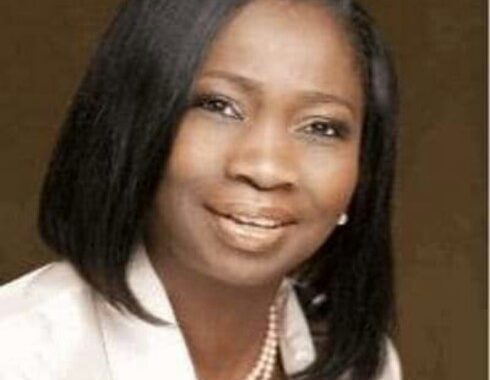
In 2001, President Obasanjo, in Atlanta, Georgia, initiated a major Nigerian Diaspora project with a view to tapping into the huge Nigerian Diaspora resources for development of Nigeria. The idea was basic and simple - Nigeria's quest for development, especially in the field of science and technology and human capacity building would require a structured and systemic engagement of Nigerian citizens overseas. Everybody saw this initiative as a brilliant policy move. Obasanjo's government teamed up with prominent American-based Nigerians such as Emeka Ugwuonye, a Washington DC based lawyer, Bart Amu, an Atlanta based medical doctor, Professor Augustine Esogbuo, etc. to establish the first Nigerian Diaspora Organization (NIDO) for the Americans with offices in the Embassy of Nigeria. There was so much excitement, especially on the part of Nigerians in the Diaspora who assumed that a new era of strategic engagement with their home country had come. They remembered with envy the strong relationship between Israel and the Diaspora Jews. And thought that President Obasanjo's Diaspora initiative would replicate the Israeli model. Unfortunately, the Nigerian brand of politics and half measures kicked in and the Diaspora project got caught in the middle. First, there was tension over which Nigerian Consulate in America - Washington DC or Atlanta, would represent the Nigerian Government in the partnership. Second, the conditions for funding of the project were an issue. Further, conflict of interest among the officials of the Diaspora organization rose to problematic levels, as some saw it as opportunity to get positions in the government at home. With such perversive incentive structure, the project was undermined soon after inception. The only option was for the government to play some stabilizing role. It didn't. Instead, successive administrations in Nigeria developed ambivalence toward the Diaspora project and abandoned the original ideas. Lack of unity and stability within Nigeria further derailed the Diaspora movement. The question may now be asked: What is the current state of the Nigerian Diaspora project? The honest answer will acknowledge the startling failures. There has been a complete change in the concept. Rather than stable interface with Nigerians overseas giving back to their home country and the Nigerian government enabling them, we have a Diaspora Commission that hates Nigerians overseas and treats them with contempt. The Diaspora Commission is headed by Mrs. Abike Dabiri, a person of zero credentials on Diaspora matters. Mrs. Dabiri is known best for her unreasonable and provocative statements and hostility toward  Nigerian citizens overseas. Her latest was her gratuitous comment ordering Nigerians implicated in a recent FBI list of indicted suspects of online fraud that are in Nigeria to travel to America to surrender themselves. Mrs. Dabiri's comment is most unfortunate and totally irresponsible. First, the Americans have not yet requested the assistance of Nigerian Government in the matter. It seems Mrs. Dabiri is begging for such a request, even if American Government does not consider it in its interest to bring into America those people just to try them and feed them in prisons for many years. A proper thing for Mrs. Dabiri, if she was intelligent, would have been for her office to find out how so many Nigerians who have never been to America would have committed crimes in America and be tried in America. Since many of them are based in Nigeria, why can't they be tried in Nigeria with the evidence at the disposal of the FBI? After all, trying them in Nigeria will contribute toward the development of Nigerian legal system, and save the Americans the logistical costs of moving them to America, trying them in America, imprisoning them in America and the cost of deporting them after serving their sentences. The Diaspora project failed in other ways. Till date, Nigerians overseas still cannot vote in Nigerian elections, and there is no plan to change it. Also, they are not even allowed to return to Nigeria to contest elections because they might have acquired dual citizenship. Nigerians overseas are more alienated and excluded today than ever before. To the extent that Mrs. Dabiri is the personification of the Nigerian Diaspora policy, the Diaspora project Obasanjo started in 2001 can be declared dead and buried.

One Nigeria: A dream or a nightmare? (Part 1) By Dr. Greg (a Rambo)

Going by history, there is no doubt that since shortly before the civil war, people of Northern Nigeria have wanted one Nigeria. I say shortly before the civil war, because all along up to 1966, it was the Igbos that had wanted one Nigeria the most, and they worked hard to have one Nigeria. Also, according to history, the Yorubas have been ambivalent toward the concept of one Nigeria. That is to say: the Yorubas are ready for either way - one Nigeria or a divided Nigeria, depending on the circumstances. Sequel to the events of 1966, leading through the civil war, the Igbos lost faith in one Nigeria. Since the civil war, that faith has never been restored. The government of Nigeria became dominated by the people of Northern Nigeria with a clear policy of deliberate exclusion of the Igbos. To the Igbos, the notion of one Nigeria has never been a reality since the war. However, the  Igbos were never united on what to do since the civil war. To some Igbos, one Nigeria has been a dream that is possible. And to some other Igbos, it has been a scary nightmare. So, the Igbos are divided between those who think that one Nigeria is an affordable possibility worth exploration and support and those who are convinced it is a futile exercise that must be discarded completely and now. The greatest and hottest undercurrent in Nigeria today or the most strategically significant division in Nigeria today is not between the North and the East or even between the rest of Nigeria and the East. Rather, it is between the two Igbo factions, ie, the Igbos that believe in giving the idea of one Nigeria a chance and those that reject the idea of one Nigeria. Again, note that no Igbo person believes that we already have a perfect Nigerian union worth preserving. They all agree that Nigeria is sick. The division is between those who believe that the sick country is curable and those who believe it is not curable. The Igbo political class - State Governors class, Legislators class, the wealthy Igbos who have acquired wealth they want to protect, the intelligentsia who have hope in upward mobility under the current system, tend to believe that Nigeria is curable and they are the ones seeking restructuring of  Nigeria. Let's say that this group of Igbos are represented by Senator Ike Ekweremadu. (This is just to help you understand the argument). Then you have the other group of Igbos who believe that Nigeria is incurable and there is no need to try to give it any further trial. This group are made up of mostly the youth, those who have been disenfranchised, the bottom of the middle class Igbos and the lower class. This group is agitated, mobile and aggressive and you see them in large numbers in the Diaspora, which comprises mostly of those forced out of Nigeria by the inequities inherent in the Nigeria that exists. This group does not believe in restructuring. It wants secession. This group is represented by IPOB. We view this division between the two Igbo ideological groups, as the critical and most decisive division today on the question of one Nigeria. As long as these two groups cannot resolve their differences and come together, neither of them can succeed. Thus, there will be the initial or preliminary war. That will be the war between the two Igbo factions described above. This doesn't have to be a shooting war. But that war must be fought and won before there can ever be the main war between Nigeria and the Igbos. This first or initial war has started. What happened in Germany with Ekweremadu is a flashpoint in that war. What happened in Germany may appear to some as a mere coincidence. But viewed closely, it has been in the making over the past 6 years - the discontent has simmered and we are at the moment when a major crisis is about to crest. Unfortunately, Ekweremadu, Nnia Nwodo and the Governors are misreading what is happening. They are viewing these events through the lens of yesterday. This writer will forecast that in the emerging war between the two Igbo factions, those who believe in restructuring Nigeria will lose and those who believe in secession will win. It may take time, but the group represented by the youths will win.  (This doesn't mean they win the ultimate war) The restructuring faction will lose because two factors work against them. First, the leaders of the restructuring faction are not trusted by those that are neutral. They comprise a greedy and exploitative and corrupt class who have not shown much interest in the welfare of the average Igbo person. They are also perceived as proxy for the North. Their message is perceived as self-serving, designed for self preservation. Secondly, the failure of the people of the North to make any concessions to the Igbos will further lead to the defeat of the restructuring faction. To buttress the point above, the fact that the North is refusing to concede the presidency of Nigeria to the Igbos, a huge strategic mistake by the North, will further weaken the position of restructuring faction and play straight into the hands of the secessionists. (This analysis will continue in two more parts)

What happened to the rape case against Pastor Fatoyinbo?

The complaint of rape made by Mrs. Busola Dakolo against Pastor Biodun Fatoyinbo, the senior pastor at the COZA faith ministry, has probably gone the way of most cases against the rich and powerful in Nigeria. That is to say, the police killed the case in order to protect the rich and a paying client of the police.  Otherwise, how could the police declare an investigation inconclusive simply because the suspect that is within their reach refused to answer police invitation? By so doing, the police can be taken as saying that the investigation had gone cold, that they had followed all the leads and got nowhere. But if they have not been able to interview the suspect, they have failed to follow the most probative lead. As reported in the Premium Times, the police "set up the five-member panel to investigate the rape allegation leveled against him [Fatoyinbo] by Busola, wife of popular singer, Timi Dakolo. The embattled cleric said he did not appear before the panel because it appeared biased. "He also added that he was advised by his lawyers not to appear before the panel because it was prejudiced and may not conduct an impartial session." This case has been marked by a cruel irony and deceit. First, when the lady reported that the powerful, rich and well connected pastor raped her 20 years ago when she was 17 years old, the police failed to investigate the complaint and no reason was given for turning a cold shoulder to the lady. Frustrated by the indifference and believing that the police were compromised, the lady took her story to the press. Mrs. Dakolo's media interview that alleged rape against Pastor Fatoyinbo became a sensation. A country that normally ignored such allegation and blamed the victim suddenly came alive with unprecedented outrage against a suspected rapist. The spontaneous reaction took everybody by surprise. Human rights and women groups protested with placards in front of COZA churches. The pastor promptly placed himself on leave while he continued to deny the allegation. There was hope that this case might change for good and better the way Nigerian address cases of rape. Like a typical Nigerian rich man accused of some crime, Pastor Fatoyinbo turned the police against the accuser. He filed a petition with the police accusing Mrs. Dakolo and her husband of defamation. As typical of the Nigerian police, the police ignored the rape allegations and went after the woman and her husband for defamation. In a clearly calculated effort to frustrate and intimidate, the police issued their infamous invitation letters trying to cause the couple to leave their Lagos abode and travel to Abuja to be questioned. As the couple chalkenged this move, the police staged a shameful attempt to arrest them. There was a public outcry as many questioned the motive of the police. This embarrassed the Inspector General of the Police (IGP), who directed that both the rape and defamation allegations be investigated in Lagos. While the Dakolos went to meet with the police, as requested, Pastor Fatoyinbo refused to go. Normally when a complainant fails to meet the police for further investigation into his complaint, the police could treat that as a sign that there is no merit in the complaint. However, when a suspect fails to honor police invitation, the effect is the opposite. The police seemed to have reversed this neat logic in the case of the Dakolos against Pastor Fatoyinbo, by declaring the investigation into the two cases inconclusive just because the suspect (Fatoyinbo) refused to honor the police. As sad and unfortunate as it is, at least the Dakolos managed to have escaped what was to be a brutal police persecution through the attempt to ignore their rape allegations and prosecute them for defamation in Abuja. Unfortunately, she will not be able to pursue a civil remedy against the pastor because the incident occurred 20 years ago, while a civil cause of action expires after six years from the date of the incident. For the alleged victim of rape, it is a painful goodbye to justice. For thousands of rape victims ignored by the Nigerian justice, they still have to wait for another occasion when the country's law enforcement will step up the fight against rape and crimes of sexual violence. Like this post/article? Add your friends to DPA today.