

info@dpadvocates.com
+234-814 083 0309

Blog Full With Left Sidebar

Caption placed here

Further on ex parte proceedings

DPA Rambo explains the law to DPA members FURTHER ON EX PARTE PROCEEDINGS (How it works) I assume you read my earlier post on the meaning of 'ex parte' as used in law. Your interest in my earlier post prompted me to take you a little deeper into the subject. Again, the term 'Ex Parte' is a Latin term that translates to "from a side". In modern legal usage, it means: "With respect to or in the interests of one side only or of an interested outside party." There is something that confuses even lawyers. It is not every time that the court makes an order or renders a judgment without hearing the other side that you can call the proceeding an ex parte proceeding. There can be a default judgment, which is also a judgment based on one side only. But default judgment is different from an ex parte judgment or ex parte order. What is the difference between ex parte proceeding and proceeding in default? In ex parte proceeding, you did not put your opponent on notice to inform him that you filed an application against him and he does not know that you are proceeding against him in court. In ex parte proceedings the court is prepared to give judgment based on the argument of one side only. But a default proceeding involves a case where your opponent was informed of the case, but he refused to respond or show up on the trial date. If your opponent fails to come to court, the court will give judgment based on one side of the case - that is the side of the party that came. Ex parte judgment and default judgment are both one-sided judgment. In ex parte, the judgment is one-sided because the other size was never offered the opportunity to present his side of the case. But in default proceedings, the judgment is one-sided because the other side refused to come to present his side of the case even after he was given the opportunity to do so. Both ex parte judgment and default judgment can be vacated or set aside based on a Motion to Vacate. (That's what Femi Falana needs to file on behalf of Sowore). But where it is an exparte application you only have to show that the ex parte judgment was given based on incorrect or false information, whereas to vacate a default judgment, you also have to explain satisfactorily why you failed to show up when you were summoned to show up. If you cannot give a good reason for your absence, the court may allow the default judgment to stand even though he now knows the judgment was based on wrong grounds - eg, you never owed the money you have been ordered to pay back. Remember that apart from criminal cases, you are not required to be in court for your case. It is not compulsory that you come to court. The only consequence of your absence is that the judge will assume that everything said by your opponent is true, and judgment will be given to him on his words alone. That is a default judgment. But if it is a criminal case, you must show up. If you don't come to court, the trial cannot continue in your absence. Instead the court will issue a bench warrant, which is the way to force you to come to court. Also, denying an accused person bail is another way to make sure he is present in court for his trial in criminal cases. Now that I have explained ex parte proceedings and default judgment, can you understand why Emeka Ugwuonye told DPA members that DPA could take a decision based on the one-sided account of a woman in marital dispute or domestic violence. Some of you would argue endlessly that DPA must hear both sides before acting. But you forgot there was no way to force the man to give us his side of the case if he is not willing. Finally, the fact that a judgment was given without hearing the other side does not mean it is an unjust judgment. There are many ways to ensure that ex parte judgments and default judgments are fair and just notwithstanding that they are one-sided in the process that led to them. In other words, even though the process is one-sided, the resulting judgment should not be one-sided - it must be fair and just to all parties. Next time, I will explain how to ensure that a one-sided process does not result in one-sided justice. If you really need to learn the law and to make the law work for you instead of working against you, you need to enroll in the DPA law courses coming soon. We have world class law professors to take you on.

Nigerians, A people with extraordinary capacity for noise

A Nigerian civil society group known as SERAP is reported to have written to the UN Human Rights Council regarding Sowore. They urged the UN Council to order the Nigerian Government to release Sowore. This is as much a propaganda as Sowore's bogus revolution. The UN Council they refer to will do absolutely nothing in Sowore's case because Nigeria has followed its laws meticulously in the manner they have handled Sowore. We saw the video of the arrest. The suspect was not brutalized when arrested. They did not harass the lady they saw with him in his hotel room. The operatives acted professionally. Otherwise, they would have arrested him with the lady or say something to reveal the identity of the lady to embarrass him. They left the lady alone. They did not brutalize him during arrest. Also, they treated Sowore decently after his arrest. For instance, they flew him to Abuja without placing him in handcuffs. Otherwise, they actually move other suspects by road, handcuffed and blindfolded for the 9 to 10 hours journey through the rough Nigerian roads. But they gave Sowore the best treatment they could afford. Further, since he arrived in Abuja, he has been treated fairly. As one Adeyanju, a friend of Sowore, revealed on his Facebook post, Sowore was given access to friends who were allowed to bring food to him and even take pictures of him in DSS custody. Also, Falana, Sowore's lawyer has confirmed that he has had both telephonic and physical contact with him. So, essentially Sowore has received much better treatment in Nigeria than the Wikileak cofounder, Julian Asenge, has received in the UK. So, what is the special argument that SERAP can make to the UN Council? Also, the detention of Sowore is now pursuant to a valid order by a court of competent jurisdiction. All Sowore's due process rights have been observed and are in tact. Sowore's lawyer has indicated in many public speeches that he would file an application with the courts to secure the release of Sowore. That means an affirmation that Sowore has adequate remedy within the Nigerian legal system and he has not been denied access to the Nigerian courts. And finally, there is no doubt that Sowore is represented by a competent lawyer. Indeed, going by his speeches, Falana is the best lawyer in Nigeria. Do you now understand how silly the effort of SERAP is? It is just noise and smoke without fire. The UN Council may thank them, and they push aside their irrelevant letter. The UN Council has more important things to deal with. They cannot interfere with a properly progressing trial of a treason and terrorism case, where the suspect is represented by the best lawyer in the country. What troubles me really is that SERAP people know all this. Why then did they bother to send a letter to the UN Council and let the world know that on pages of newspaper? The answer is simple. The Nigerian megalomania! Just like the pretended revolution, this is a pretended international law activism. We Nigerians need to save ourselves from this kind of pretence and propaganda.

Revolution- Anytime: To be fair to Sowore, he knew not what he did

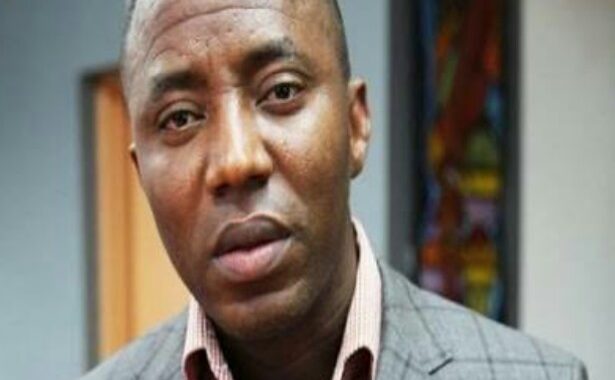
A question has arisen why Sowore called the protest he planned a revolution. Why use the term 'revolution'? I have a very simple, but shocking answer. And that is: Sowore did not really know the meaning of the term revolution. What Sowore wanted was a massive protest that would shake Nigeria and force the government to make concessions to him the way the Vice Chancellor of University of Lagos used to make concessions to the students union during the time Sowore was a member of the students union. He just wanted to lead the protest by answering the Convener. If you noticed, he often used the same language used by students union leaders in the 90s. Most people who hear of Sahara Reporters do not realize how shallow and how poorly educated Sowore is. Did you realize during the campaign, that apart from throwing slogans around, when he was finally pinned down to a debate, Sowore was empty and totally inarticulate. I am confident that Sowore never sat down to study and understand the meaning of the term revolution. That is why he thought that what happened in Egypt that replaced Mubarak's dictatorship with Morsi's Brotherhood and finally Al Sisi's dictatorship was a revolution to recommend to Nigerians. Sowore was a poor student of geography in Unilag. He spent 100% of his time in Unilag on students unionism and trying to close down the university to postpone exam dates. He came out of the university in the bottom of his class. Sowore's unionism was not of the deeply intellectual nature of Ogaga Ifowodo of Uniben. Ogaga was a student of law and literature, and a poet. Sowore was a poor-performing student of geography who was extremely violent and disruptive and destructive. (Ogaga is now a calm and cool-headed professor of literature in the US) Sowore was also very violent as a student union leader. He participated in raping another student, which caused Mike Okilo, then Commissioner of Police for Lagos to arrest him. Sowore was on bail for the crime of rape when he left for America where he claimed asylum on the pretext that he was a staff of MKO Abiola and that Abacha was after him. While in America, he enrolled in a program in Columbia University, which was a program designed for foreign students. Then he teamed up with one Elendu, who owned the Elendu Report. From there Sowore discovered that people are ready to pay to have their enemies scandalized or to avoid being scandalized.  Sowore wanted to take this new business to the next level by being more aggressive in what they could write, who to write against and how much to charge. When he felt that Elendu was not aggressive enough and that he was not getting what he considered a fair share of the money, Sowore left Elendu Report and established Sahara Reporters. Unlike Elendu who used his name in his writing "Elendu Report", Sowore did not want his name in his own "Sahara Reporters". Because of this, Sowore was able to attack in a more aggressive manner than Elendu because while people knew who was behind Elendu Report, it took over four years before the public were able to know who was behind Sahara Reporters. Indeed, the domain name for Sahara Reporters website was initially registered anonymously under Domainbyproxy. It was during the time Emeka Ugwuonye sued Sowore for defamation that Ugwonye forced Domainbyproxy to provide the name and address of the real owner of Sahara Reporters as Omoyele Sowore, and they dropped Sowore as their client after they received a subpoena from Emeka Ugwuonye. Back to the issue, Sowore did not understand the meaning of the term 'revolution' and he still doesn't understand it. All he wanted was to force the government to recognize him. It was the power and ambition that drove him. He has seen that most people are gullible. He got away  with the manipulation he could cause with Sahara Reporters. He wanted to try something bigger. His ambition and amorality have no limits. So, a revolution sounded like a convenient next step.

What the Police Leadership Should Know

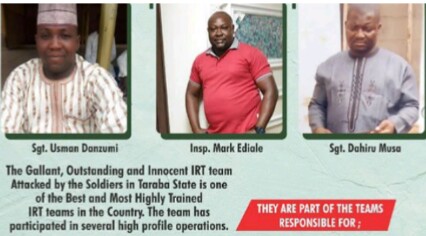
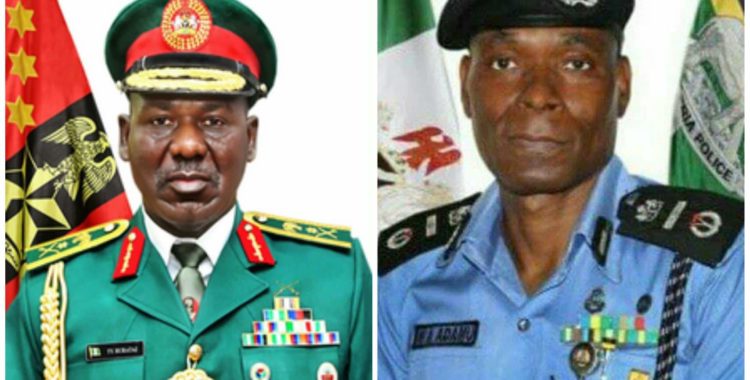
It is surreal that Nigerians should rejoice on hearing that three police officers assumed to be on official duty were mistaken for armed robbers and gunned down by Nigerian soldiers. But this is exactly what is happening - many are happy that the policemen were killed by the superior firepower of the military. What is most guaranteed is the reason people rejoice. People are happy because they have been victims of extreme police brutality and depression of the civilian population. Among the things the police are accused of; are taking of bribe, demanding money for bail, unlawful arrest and unlawful detention, extra judicial killings, framing up innocent people, witness tampering, armed robbery and kidnapping. In other words, despite the slogan - "police is your friend",  Nigerians actually see the police as their enemy. This must pose serious problems on several levels. On the level of the society, it is extremely unfortunate to have a police force with so much distrust between it and ordinary members of the society. It is virtually impossible for normal policing work to be done with such level of lack of confidence. This was the problem everybody hoped that Mr. Abubakar, the current Inspector General of Police (IGP) was to address head-on upon his appointment in January of 2019. Unfortunately, despite the fact that one of his first decision in office as the IGP was to appoint Mr. Frank Mba, a Deputy Commissioner of Police, the new police public relations officer, not much else has changed. On the level of Mr. Mba, this is beyond crisis. The image of the police could not be lower and the level of mistrust never higher. Even though Mr.Mba is light years ahead of his roguish predecessor, Mr. Jimoh Moshood, the accumulation of failures during Moshood's period in office still weighs the police pubic relations office down. Mr. Mba has had his missteps, but the current public trading of accusations and counter accusations between the police and the army is the worst ever. There is no doubt that the police leaders have to wake up to the challenge. The problem has not been that they were unaware of these problems. Rather, the problem is that they have  been in a systemic state of denial. Last July, DPA Founder, Emeka Ugwuonye made a number of posts on Facebook pointing to many problems with the police which were eroding public confidence in the police. Rather than welcome an honest criticism, the police landed a heavy-handed persecution of Ugwuonye to the point of fabricating a murder charge against Ugwuonye and covering up the man that was believed to have killed his wife. As at this moment, Nigerian police continue to maintain illegal prisons that contain more inmates than the number of prisoners within the official prison system. And the inmates in the illegal prisons run by the police are detained under  conditions worse than those of slaves in the infamous transatlantic slave ships. Without a fundamental review of the situation, public confidence in the police will continue to erode. Pictures of the slain policemen are shown below.

BREAKING NEWS: POLICEMEN KILLED BY SOLDIERS – WHAT REALLY HAPPENED?

  The incident that occurred in Taraba State whereby some soldiers shot dead three policemen and wounded others might  hold more secrets than was revealed what the police spokesperson presented to the public. As reported in the Punch and other media, "The Nigeria Police Force has accused some unidentified soldiers of shooting to death three police officers and a civilian along Ibi-Jalingo Road, Taraba State. Several other officers were also injured during the attack. The Police operatives led by ASP Felix Adolije of the Intelligence Response Team reportedly came under sudden attack while taking a kidnap kingpin, Alhaji Hamisu, to the Command Headquarters in Jalingo. The Force spokesman, DCP Frank Mba, explained in a statement in Abuja on Wednesday that one Police Inspector, two Sergeants and a civilian died as a result of gunshot injuries sustained in the attack" - Punch. There seems to be more. Police officers in the special police unit known as Intelligence Response Team (IRT), led by one ASP Felix Adolije, traveled from Abuja to Taraba State in order to arrest a businessman suspected of being a kidnapper. The businessman was said to have been set-up by a politician (member of the House of Rep) with whom he had a quarrel. The politician instigated the police operation. This incident occurred in Ibi Local Government, Taraba State. The police team decided to raid the house of the businessman around 1:00am. The neighbors of the businessman, seeing how the man was bundled up by strange looking armed men, assumed the men were kidnappers. They called the soldiers at the nearby military checkpoint for help. The IRT men were travelling in a Hummer bus driven by one of them. There were 10 police officers in their vehicle plus a civilian who directed them to the suspect's house. On their way going, they crossed two military checkpoints.  It was said that the men did not disclose their identities or mission to the soldiers at the checkpoints on their way to the suspect's house. However, coming back after arresting the man, the policemen crossed the first military checkpoint without stopping. They did not realized that the soldiers had become suspicious of their vehicle based on the alert they received. The soldiers who had seen them earlier, probably noticed an additional passenger in the vehicle. Believing that this was an active kidnapping operation, the soldiers at the first checkpoint alerted their colleagues at the next checkpoint. It is not clear what exactly happened next. But it is believed that acting on the alert received from soldiers at the first checkpoint, soldiers at the second checkpoint opened fire on the fast approaching vehicle. The bus crashed and three police officers and one civilian lay dead, four officers critically wounded and three officers ran into the bush. It is not clear whether the men died of the crash or gunshot wounds. Apparently, the suspect survived. While the details are still murky, it seems that there were blunders and unprofessional tactics on both the policemen and the soldiers. The police ought to have understood the implications of there being those military checkpoints and should have factored that into their operational calculus. What would soldiers on a checkpoint think of unidentified men in a speeding vehicle in the middle of the night? That was the what-if question they failed to ask. Also people familiar with how the IRT men behave in traffic speak of the extreme arrogance and intimidation of even other security men they encounter on the highway. On their part, the soldiers failed to know how to stop an approaching vehicle without shooting at it. The fact that some of the officers were able to run into the bush suggests that the vehicle had stopped before the altercation, which will suggest that the IRT men identified themselves. The whole story is confounded by the fact that the suspect managed to escape. The soldiers failed to ensure that the survivors of the crash and gunshot were trackable, especially after realizing that the men were police officers. The police headquarters has declared where the police stand on the matter. It remains for the military to indicate the outcome of its own investigation. There are many lessons from what happened.

Court to decide today on the detention of Sowore

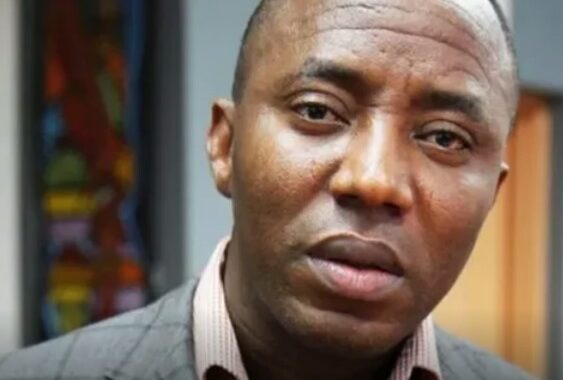
The DSS, apparently trying to ensure that they followed the Nigerian law in their handling of Sowore case, filed an ex parte application for an order of court to approve detention of Sowore for 90 days. According to the DSS, they would need that time to carry out investigation on the alleged criminal activities of Sowore. It is disturbing to us that as long as 90 days would be needed to conduct any such investigation. It is also disturbing that the suspect (Sowore) should be in detention during the entire period. Anywhere else in the world, that would be considered an unjustified period of investigation during which a suspect would need to be in a pre-indictment detention. You need to know the deference between a pre-indictment detention and pre-trial detention.  Pre-indictment detention is called holding charge in the Nigerian parlance, while pre-trial detention is called awaiting trial. The DSS want a court order to detain Sowore for 90 days before they could file any charges against him. Even though Nigeria allows that kind of procedure, international practice abhors it. The government is expected to be ready with s charge just few hours after arrest, if no arrest warrant was obtained or immediately upon arrest if a warrant of arrest was obtained.  No pre-indictment detentions in developed countries in the present time. However, after charges have been filed, there will be pre-trial detention (bail) application, to determine whether there is a good reason why the person should not be released pending trial. Notice the remarkable difference between advanced counties and Nigeria. In advanced countries, liberty is the default state. So, it is the government that should show why a person accused should not be granted bail. But in Nigeria, loss of liberty is the default state. And, it is the accused person that should show why he should be granted bail. So, it means that once a charge is filed against you in Nigeria and you are arrested, you are as doomed as a tried and convicted person. (DPA is working to change this practice). The position is slightly different if it is a pre-indictment situation, such as Sowore faces right now. In pre-indictment situation, liberty is the default state even in Nigeria. So the government is the one to show why the suspect should be detained. Again, pre-indictment detention is detention pending investigation, which is rarely allowed these days in civilized counties, while pre-trial detention is detention pending trial, which is possible in developed counties in very extremely rare cases. Applications for pre-indictment detentions are usually done ex parte, which is one of the reasons it is considered objectionable. On Tuesday, the DSS filed ex parte application to detain Sowore for 90 days. The ex parte motion by the DSS bears the number FHC/ABJ/CS/915/19. It came before Justice Taiwo Taiwo of Federal High Court sitting in Abuja. Being an ex parte application, it could be immediately worked up to the judge for immediately disposition. In support of their application, DSS attached a video evidence. No one knows exactly what is in the video. The judge reserved his decision till Wednesday, 7th August to enable him view the video. So, there will be a ruling later today. There will be the following possibilities in the awaited decision: 1) The court may decline to make any order for detention of Sowore. If that happens, DSS will have to either release Sowore immediately or charge him immediately and then oppose his bail application. If they charge him immediately, it will still take up to 2 weeks before his bail application will be argued. 2) The court may grant the DSS application for 90 days detention. In that case, Sowore, upon receiving a copy of the order, will file a motion to vacate the order. All that will keep him in detention for at least 6 weeks before before he can regain his freedom. 3) The court may go halfway, which is to grant DSS some time for investigating while Sowore is in custody, the period will be much shorter than 90 days, say 30 days, but may be extended. We think this is the most likely option. One of these 3 options will be confirmed today.  But one mischief remains regardless of the option the court takes, which is that the DSS will have ways to continue to detain Sowore regardless of the decision of the court. We call it a mischief because that is something DPA will like to stop in Nigeria. If Sowore wants to get out sooner, his lawyers need to negotiate with DSS for a deal that will avoid charges being filed. But making a deal with DSS will require him to compromise for the time being. He may not like to eat a humble pie. In any case, Sowore may have the problem of lawyers who may want to use his case for their own crusade. Such lawyers will like to be making inflammatory remarks for publicity. For instance, Femi Falana was reported to have said yesterday that if Sowore was charged he would make Buhari his first witness. If you are not an experienced trial lawyer, you may be tempted to find solace in such statement. But in truth, even if Falana succeeds in making Buhari his first witness, he must have to wait until the prosecution has closed its case, which could be two years away, and he must admit then that the prosecution has made a prima facie case deserving a defense. (Of course, if at the end of prosecutions case, he feels that they did not make out a prima facie case against Sowore, he will not be calling any witnesses. Instead, he should be making a no-case submission. But the desire to compel Buhari to testify as a hostile witness may cause him to deviate from standard defense counsel procedure). Note that Falana in 3 years, Falana was not able to make Buhari his witness El Zakzakky case. Before we end this piece, let it be known that presently, DSS has suspects in their custody who have been there for up to two years without them being taken to any court and without any court order. Sowore being a high profile suspect has been treated differently. We need to demand that DSS take all suspects in its custody to court or otherwise obtain a court order for their detention. That should be among the proper aims for any revolution in Nigeria. DPA shall keep its members fully informed about the legal development in the Sowore's case.